MWBC Crop Conditions: USDA Crop Production Report
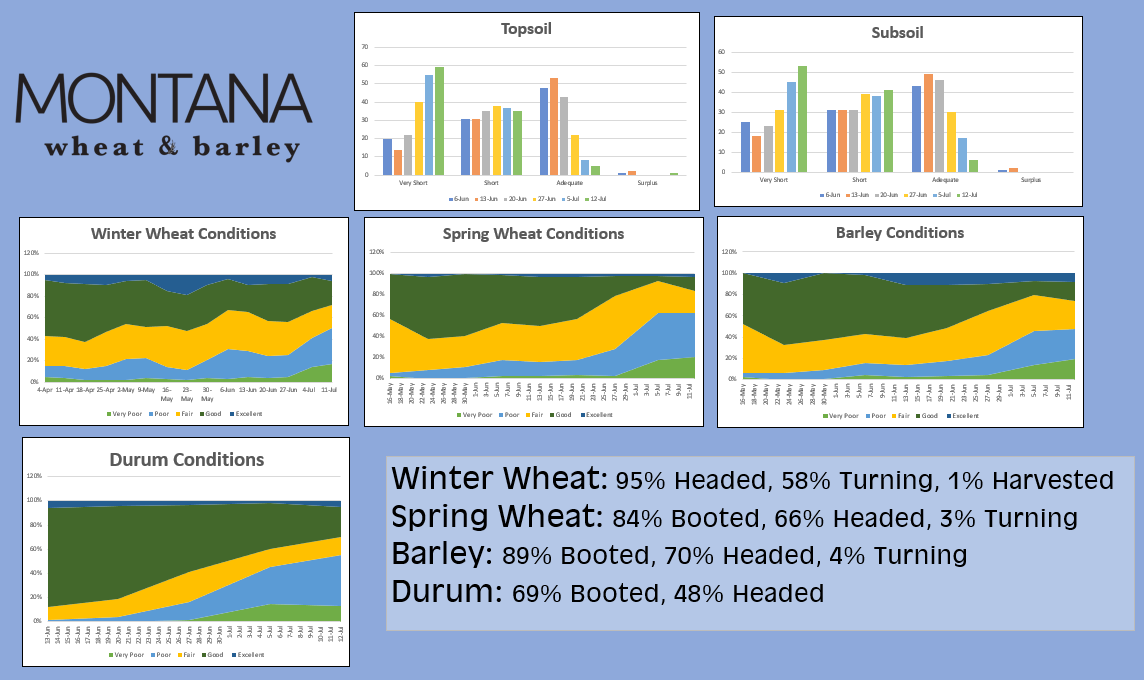
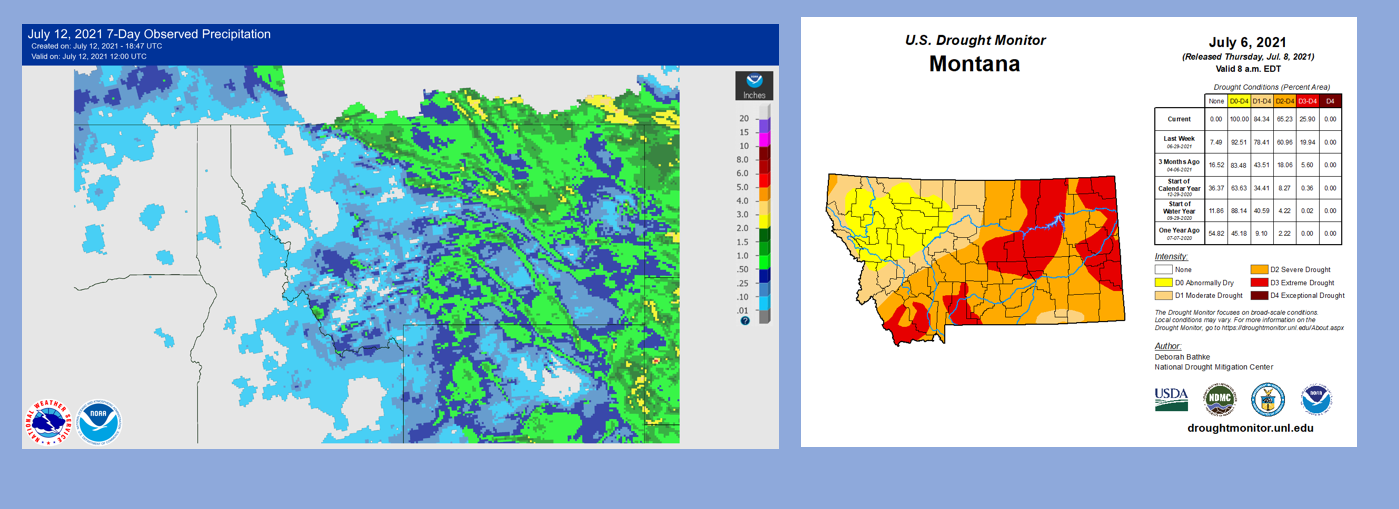
Hot temperatures and dry conditions continue to prevail across Montana during the past week, according to the Mountain Regional Field Office of the National Agricultural Statistics Service, USDA. According to the U.S. Drought Monitor, 100 percent of the state is under drought conditions, with 65 percent in severe to extreme drought. Topsoil moisture conditions for the state were 6 percent adequate to surplus, compared to 8 percent in the previous week and 83 percent the previous year. Subsoil moisture conditions were rated 6 percent adequate to surplus compared to 81 percent the previous year. Barley headed was estimated at 70 percent, on par with the previous year, also at 70 percent. The barley crop has started to progress into the next stage, with an estimated 4 percent of the crop turning color. Dry edible beans blooming is estimated at 50 percent complete. Dry edible peas blooming is estimated at 76 percent complete, slightly behind the previous year at 81 percent. Harvest has begun for dry edible peas, with an estimated 20 percent of the crop harvested. Durum wheat booted is estimated at 69 percent complete, behind the previous year of 76 percent. The oilseed crop continues to progress well, with an estimated 65 percent of both the flaxseed and mustard seed crop blooming. Canola blooming is estimated at 70 percent complete, behind the previous year at 72 percent. Oats booted is estimated at 79 percent complete, ahead of the previous year at 78 percent, but behind the 5-year average of 83 percent. Spring wheat booted is estimated at 84 percent complete, behind the previous year at 87 percent. The first cutting for alfalfa and other hay is progressing, despite reports of reduced yield due to drought conditions. First cutting alfalfa is estimated at 65 percent complete, ahead of the previous year at 60 percent, but behind the 5-year average of 69 percent. First cutting of other hay is estimated at 66 percent complete, ahead of the previous year at 58 percent, but behind the 5-year average of 67 percent. Winter wheat was reported with 58 percent of the crop turning color, equal to the previous year, but behind the 5-year average of 66 percent. Winter wheat conditions were rated as 28 percent good to excellent, compared to 78 percent this time last year.
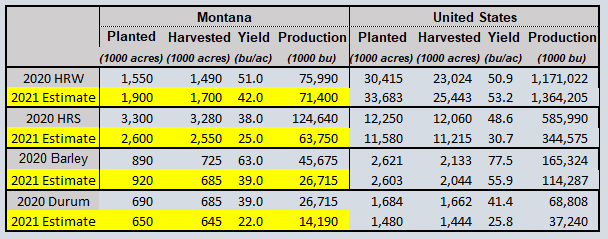
USDA released production estimates today, Montana’s production levels are looking like 2017 and in some cases half of last years production. The drought impacts are now reported, and the prices are reacting. Montana’s potentially higher protein winter wheat may offer a suitable spring wheat substitute.
Purchasing new crop will be challenge and there is no better time than now. Inflation is often talked about around the United States. The purchasing power of USD is decreasing, stock market values will decrease and the price of everything increases. YET the price of goods in the grocery store often stay similar, how can this be? This can be described as SHRINKFLATION. Bakers and food packers will decrease the volume of the same good on the shelves helping lower their input cost per item. A tricky way of keeping their products priced competitively. This will continue to be a trend possibly even more in a year like this.
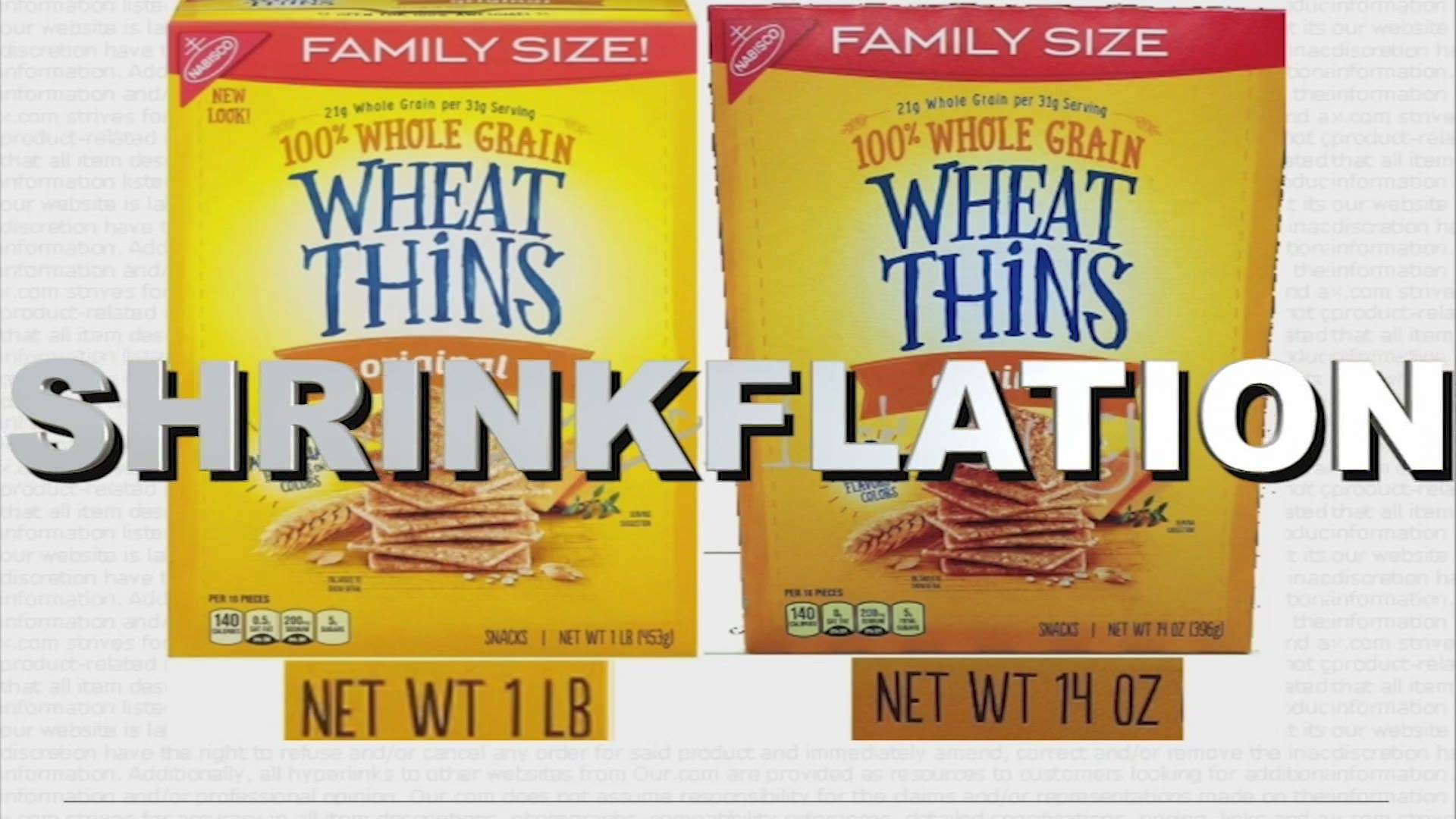
I am not at all highlighting wheat thins as a bad product; you see this everywhere. I will still be purchasing those delicious crackers, but this is a great example.
Hay prices were around $75/Ton now seeing upwards of $300/Ton. Wheat prices have seen a similar change especially considering the newly released production report. Our producers may be tempted to cut their losses and bail for hay, the farmers with future delivery contracts are loyal to their elevators and will not bail unless instructed to. Barley producers have multi-generational contracts with maltsters that have provided for their families for decades. With all that said, loyalty is a key component in a traumatic year, we WANT to feed the world and will do our best to harvest a usable crop.
Welker farms in the Shelby MT area saw a big storm last night, the dreaded white combine:
Combines are kicking off harvest 2021 early:
Eastern Montana saw upwards of .5 inch of rain. This should help the crop in grain fill greatly. While some producers have written off harvest 2021 to hay, we are still going to see a fair amount of harvested grain. Scattered showers this Tuesday will spark some slight optimism.
A look at irrigated barley along the Fairfield bench, quality looks great!
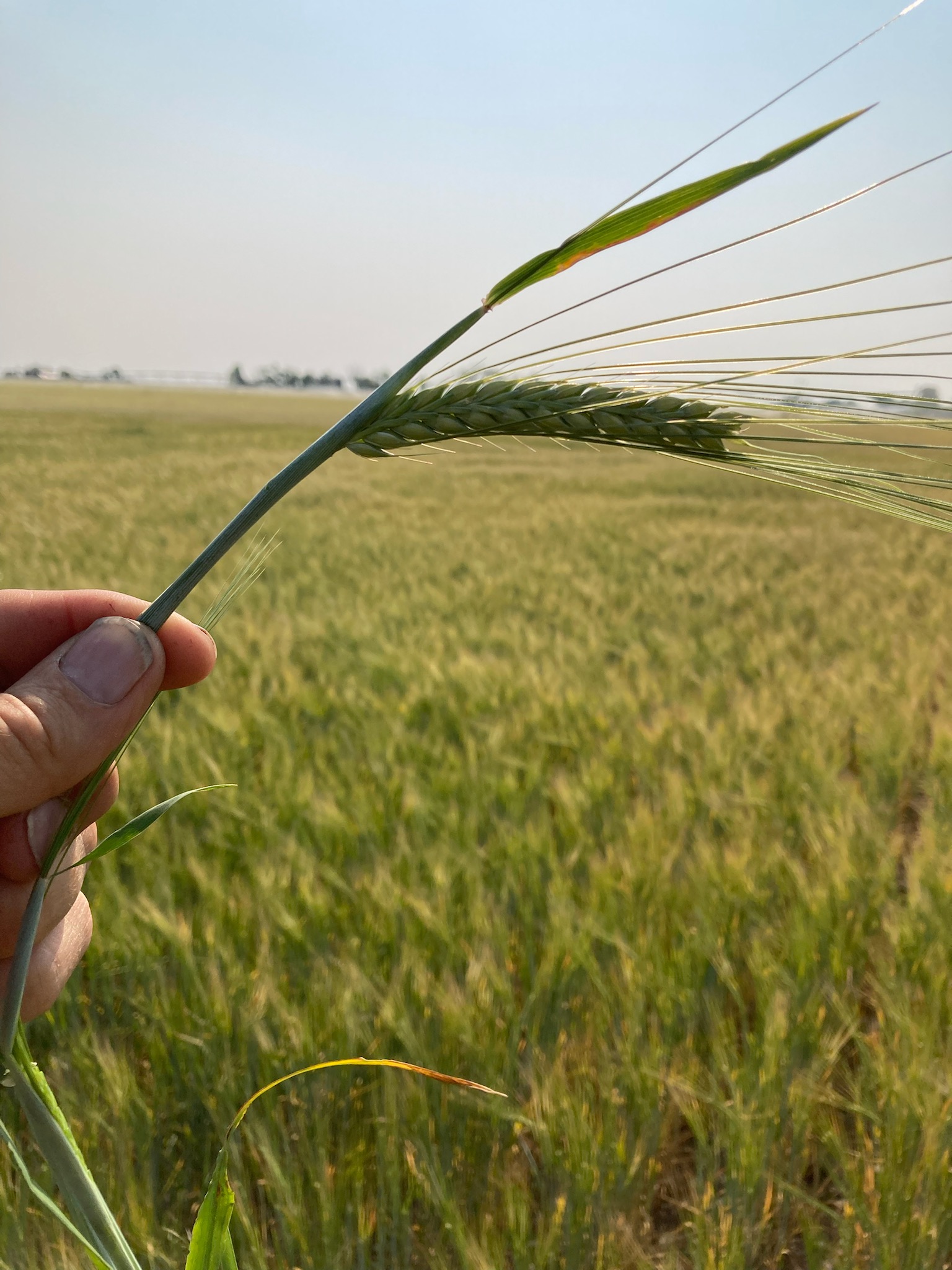
Some dryland barley near Ulm MT. Stressed heads turning early.
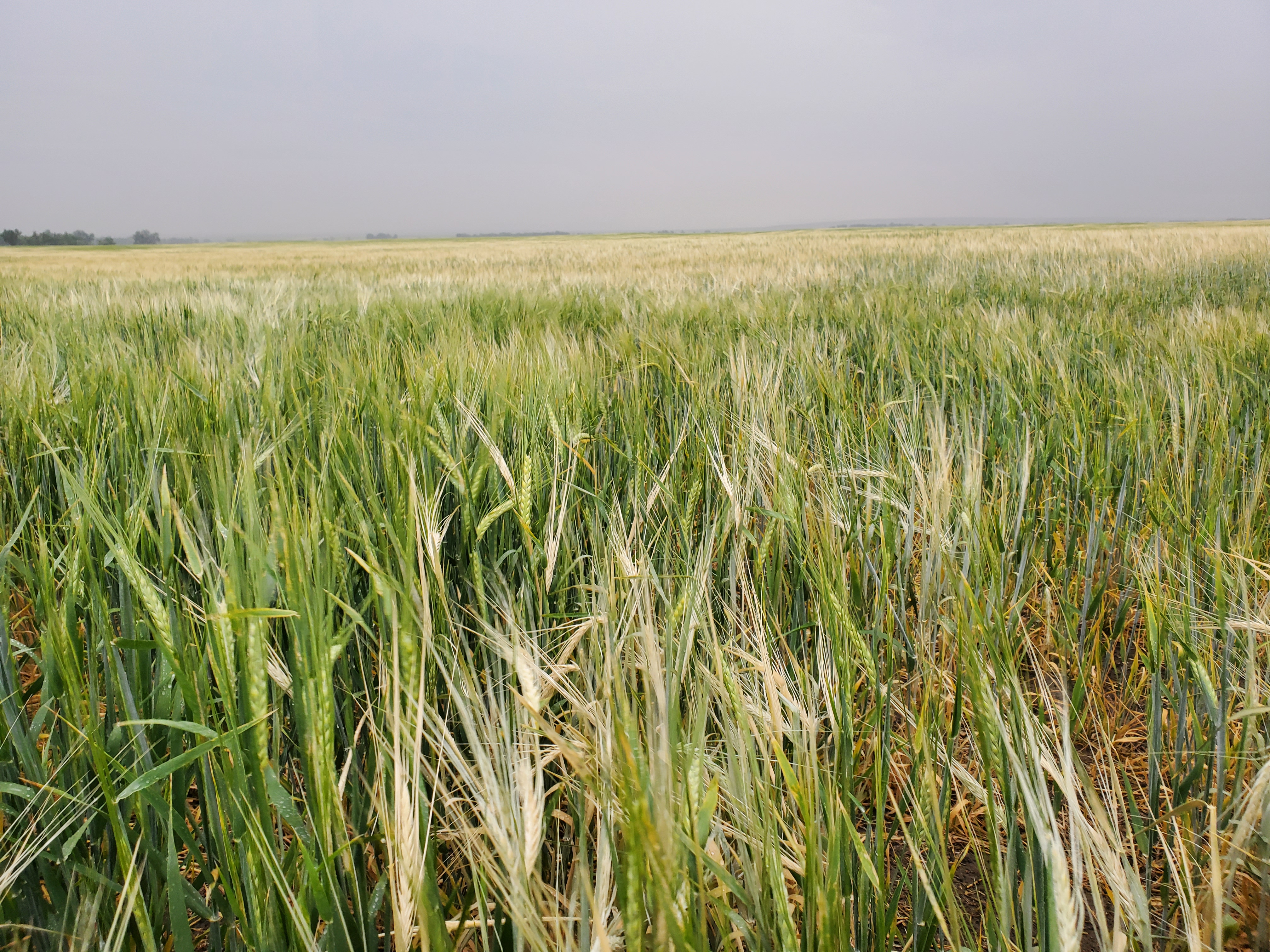
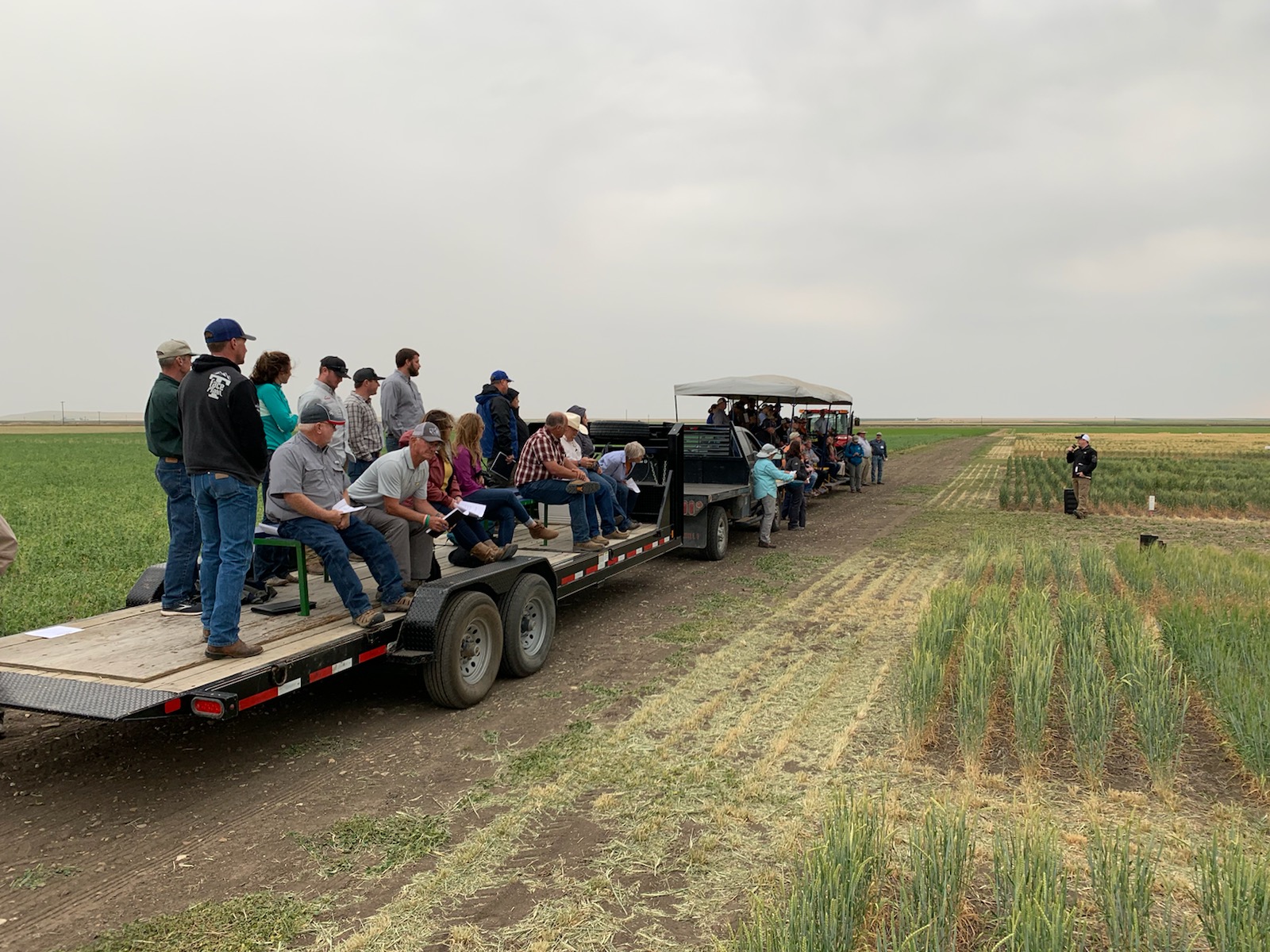
And finally MSU field days have been a huge hit this year. Lots of interesting discussions and exciting research funded by the producers of Montana. Moccasin MT was today. Conrad and Creston to follow.
If you need help sourcing wheat and barley ingredients for your business, we would love to help. We will connect you with several options that provide numerous methods of delivery. All our wheat and barley suppliers can conduct negotiations virtually to fit your country or states regulations if needed, otherwise social distancing is not a problem out here
Tags: