MWBC Crop Conditions: Winter Wheat 10% Harvested
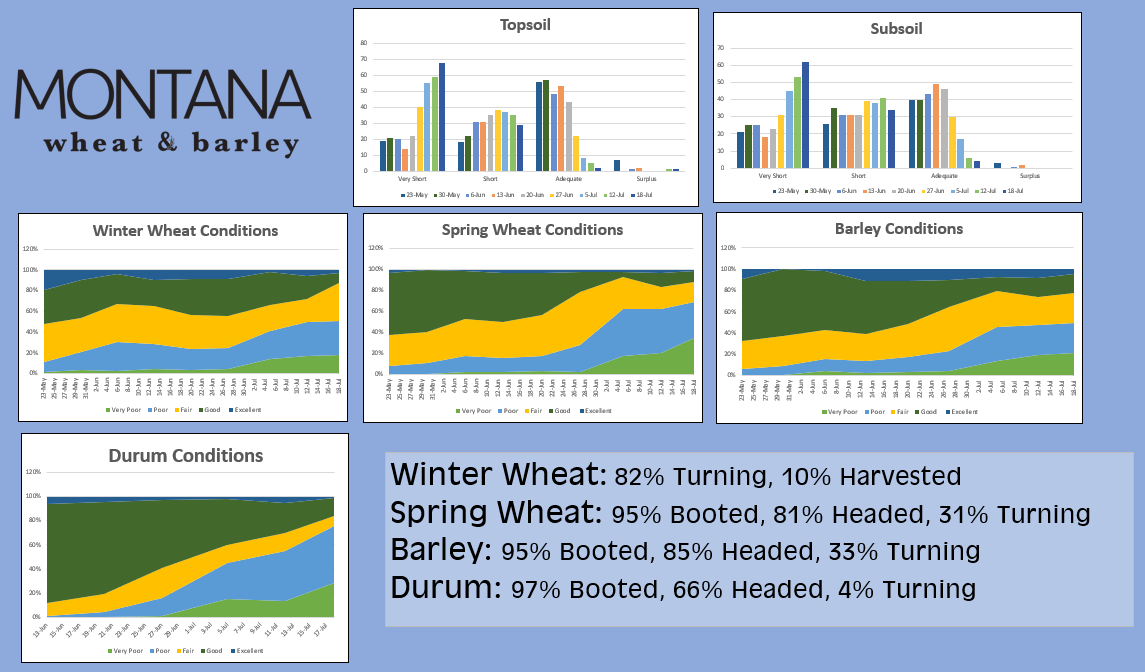
Hot temperatures and drought conditions continue across Montana during the past week, according to the Mountain Regional Field Office of the National Agricultural Statistics Service, USDA. According to the U.S. Drought Monitor, 100 percent of the state is under drought conditions, with 72 percent in severe to extreme drought. Reporters across the state noted that several crops have been cut for hay as drought and grasshoppers continue to deteriorate crop conditions. Topsoil moisture conditions for the state were 3 percent adequate to surplus, compared to 6 percent in the previous week and 75 percent the previous year. Subsoil moisture conditions were rated 4 percent adequate to surplus compared to 79 percent the previous year. Barley headed was estimated at 85 percent, slightly ahead of the previous year at 84 percent, but behind the 5-year average of 86 percent. Dry edible beans blooming is estimated at 67 percent complete. Dry edible peas blooming is estimated at 95 percent complete, slightly ahead of the previous year at 94 percent. Harvest for dry edible peas continues ahead of normal, with an estimated 37 percent of the crop harvested, compared to the 5-year average of 7 percent. Durum wheat headed is estimated at 66 percent complete, ahead of the previous year of 64 percent. The oilseed crop has started to progress into the next stage, with an estimated 11 percent of flaxseed and 29 mustard seed crop turning color. Canola turning color is estimated at 36 percent complete, ahead of the previous year at 23 percent and the 5-year average of 32 percent. Oats headed is estimated at 71 percent complete, behind the 5-year average of 76 percent. Oats turning color is estimated at 16 percent complete, ahead of the previous year of 14 percent. Spring wheat headed is estimated at 81 percent complete, ahead of the previous year at 79 percent. First cutting alfalfa is estimated at 77 percent complete, ahead of the previous year at 73 percent, but behind the 5-year average of 81 percent. First cutting of other hay is estimated at 81 percent complete, ahead of the previous year at 68 percent and the 5- year average of 78 percent. Winter wheat was reported with 82 percent of the crop turning color, equal to the 5-year average. Winter wheat harvest has begun, with an estimated 10 percent harvested, ahead of both the previous year and 5-year average of 3 percent and 6 percent, respectively. Winter wheat conditions were rated as 13 percent good to excellent, compared to 84 percent this time last year
Small grain harvest is ahead of last years pace as the crops are maturing quickly and turning color. Winter wheat is 10% harvested ahead of the 6% 5-year average. In Loma MT we are seeing around 58 Test weight, 13.8 protein, at a yield of 58 BU/AC. In the Great Falls area, we are seeing low test weights at 56-58. Over the last 10 or so years we have not seen winter wheat average below 59-60 test weight. The challenge for millers is having enough endosperm to get a decent flour yield, we are hearing below 58 it becomes real challenge even with blending. Domestic millers will be looking to source winter wheat from the good crops coming out of Kansas, Oklahoma, Colorado, and Nebraska and blend it with high protein Montana and North Dakota crops. It is still unknown how much millable wheat crop will come out of Montana this year. The test weight concern is the forefront of every industry conversation we are having.
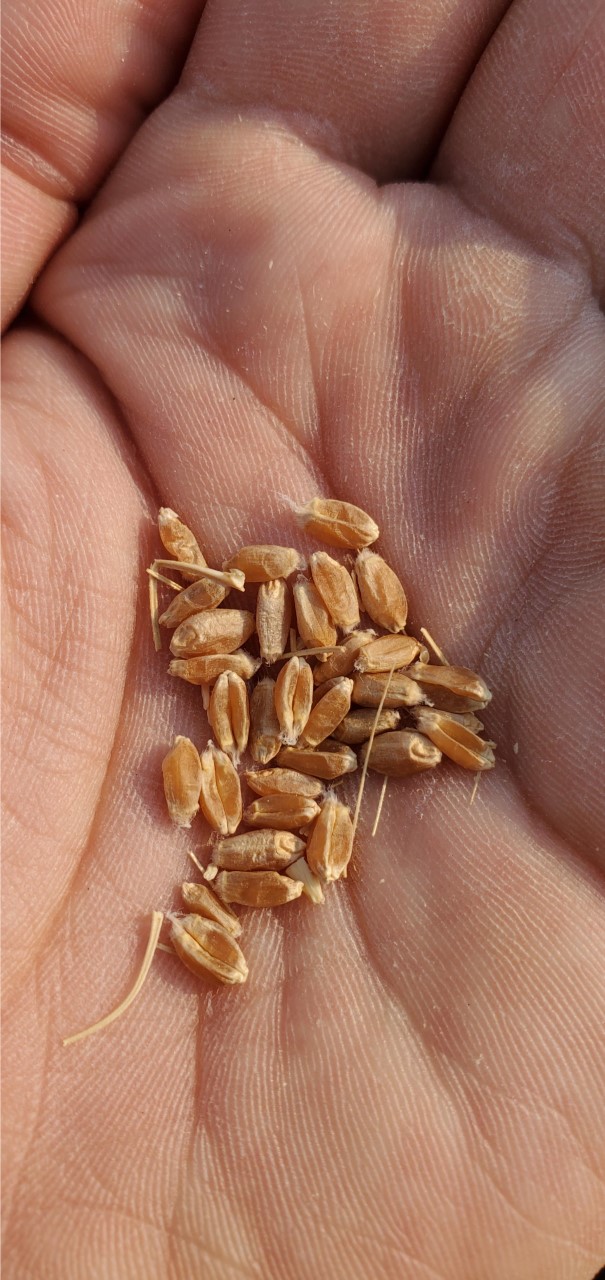
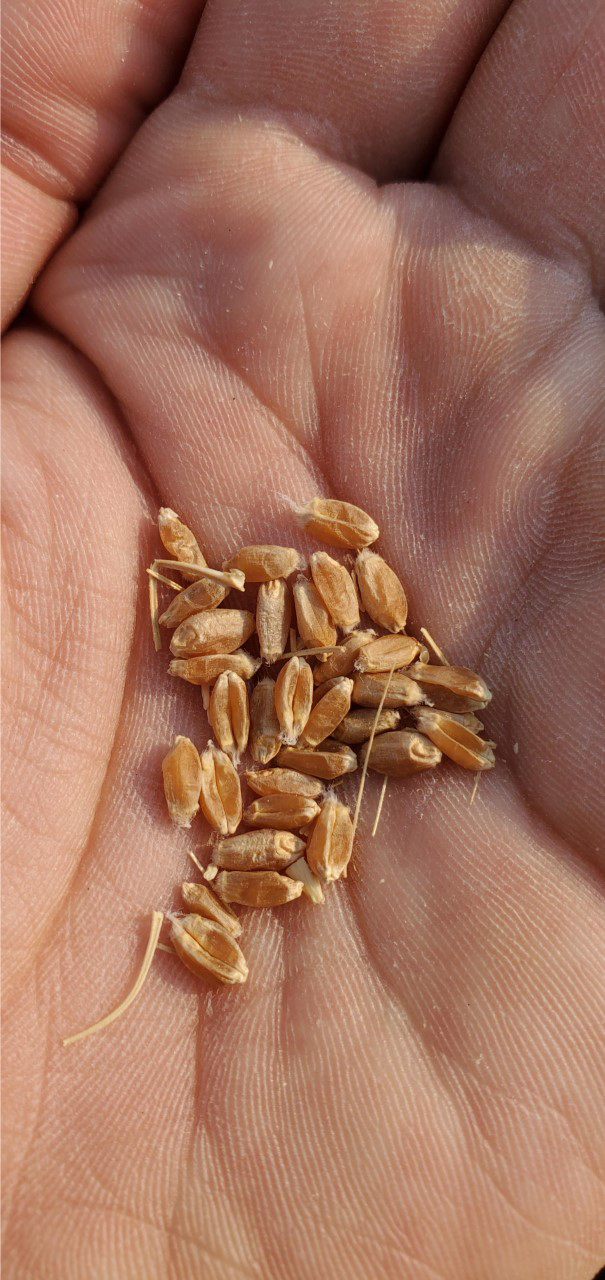
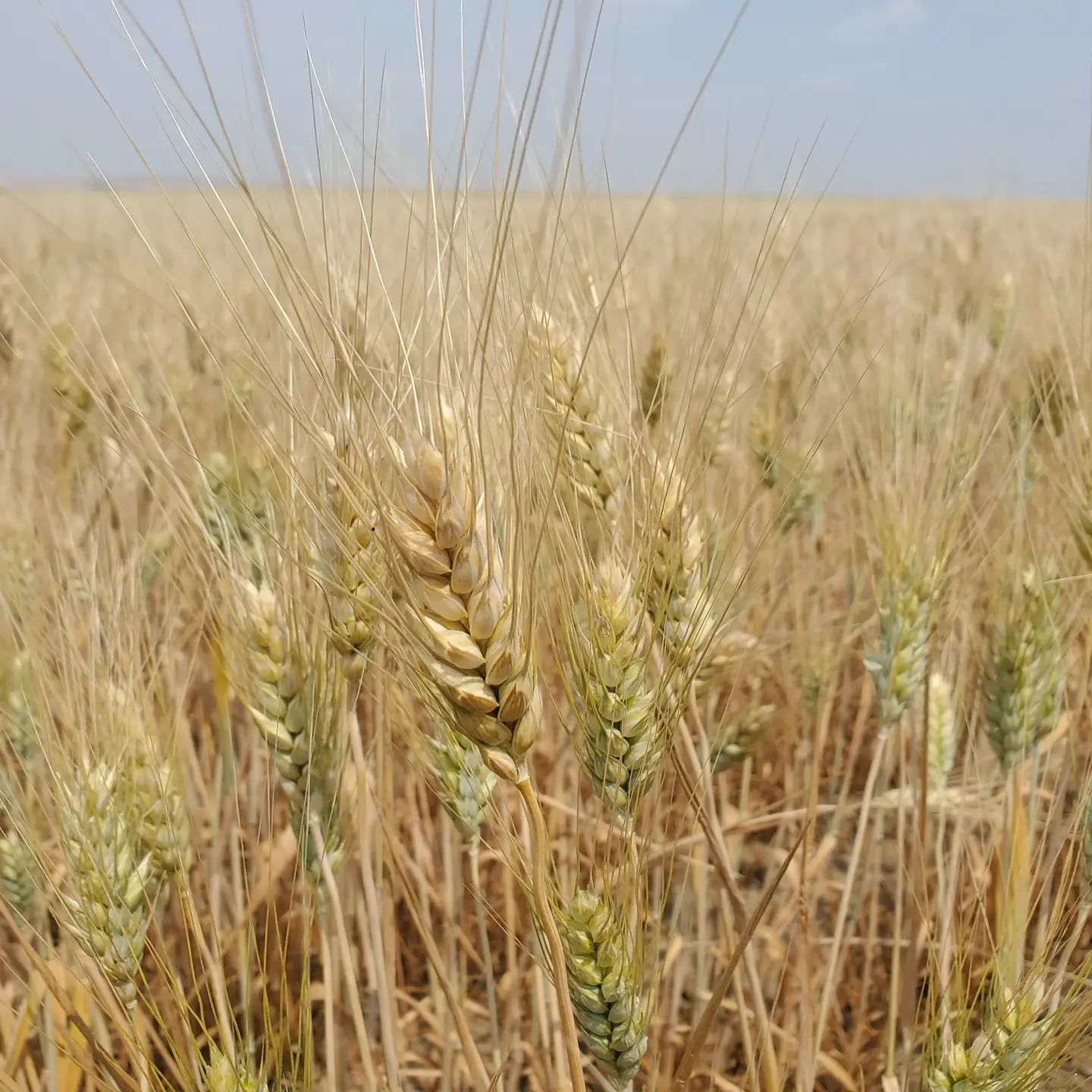
MWBC was able to get out and get a first hand look at some of the crops coming off the combine. Below a look at a west bred winter wheat grown in one of the highest rainfall areas in the state Fort Benton MT. Decent yield but low test weight.

Below, in Great Falls area we are seeing some signs of heat and frost damage, which i never thought i would say in the same sentence. Test weight ranging around 56-58
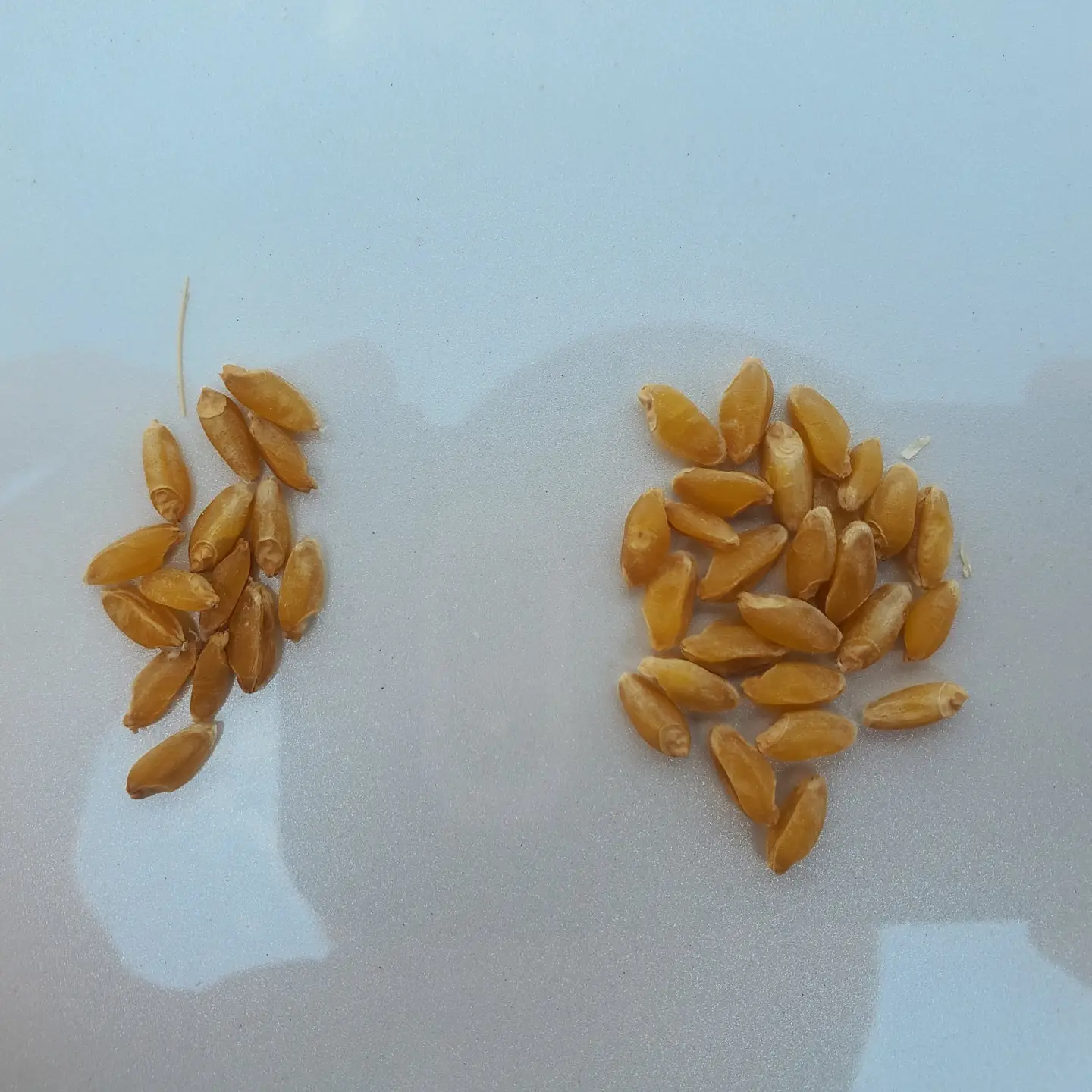
Below we have a side by side comparison of alzeda durum grown in Fort Benton MT. On the left is new crop, less plump, some shriveled kernels, high protein and dark color. On the right is last years 2020 crop, a great bright yellow color with great test weight and average protein.
Alzeda durum a few weeks out from harvest, some of the best we've seen across the state. Fort Benton MT
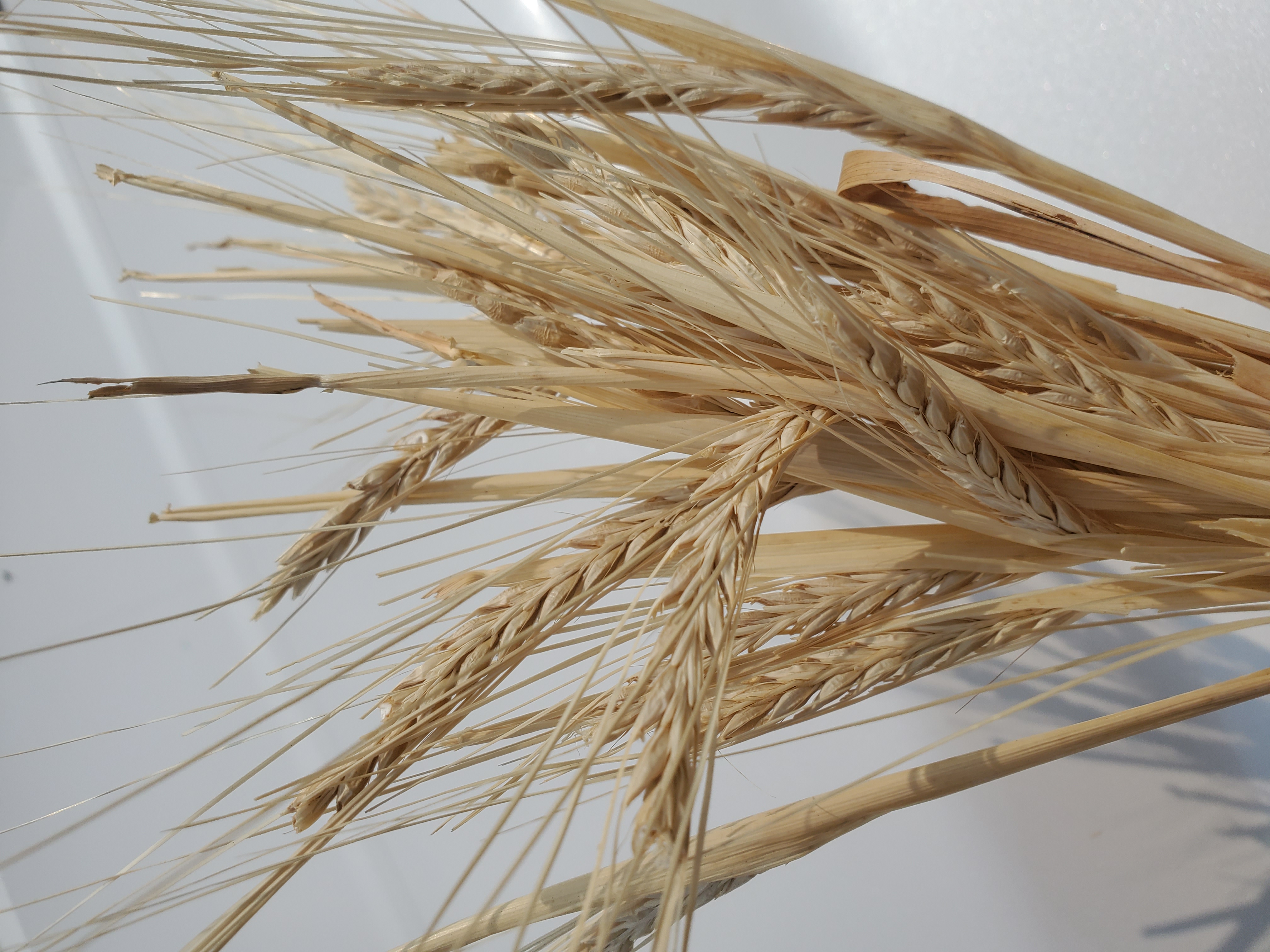
Looking at a side by side comparison of Mayflower barley. In a low spot in the field where more water would flow we see high plumps, good kernel fill and later maturing, to the right is a better example of what the field is seeing.. As Director Mike O'Hara said "drink more whiskey this year allot of the dryland barley will struggle to make beer"

Below is a group of stalks from the same sample above, which look better.
Harvest is an exciting time, families and friends gather to help, seeing the fruits of your labor can be fulfilling but also scary. Weather plays a huge role in the success of a farmer. With the rising commodity prices and the rapid decline of conditions please get in touch with a farmer, thank them and offer to lend a hand. Mental health is critically important in times of turmoil.
If you need help sourcing wheat and barley ingredients for your business, we would love to help. We will connect you with several options that provide numerous methods of delivery. All our wheat and barley suppliers can conduct negotiations virtually to fit your country or states regulations if needed, otherwise social distancing is not a problem out here
Tags: